

Frooot
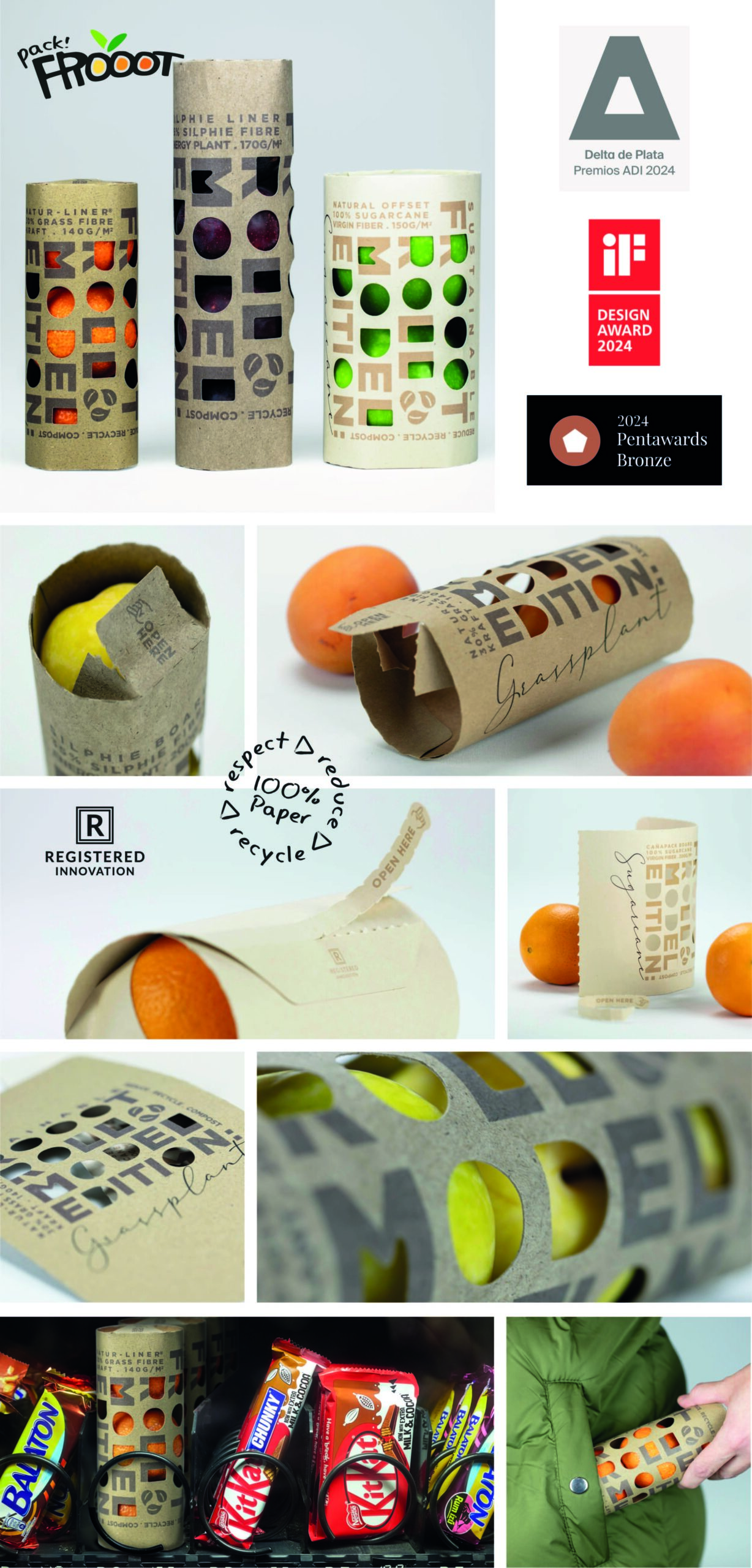
Pack!FROOOT® is a snackpack for fruit, environmentally friendly packaging that received the prestigious international IF DESIGN AWARD and was selected for the national ADI-FAD Delta awards by Association of Industrial Designers.
This new packaging has an attractive and compact design that fits in any bag or pocket. It is intuitive and easy to use and meets the requirements for snack packaging. Its structural design allows for correct handling, transport, conservation and protection of the content throughout the chain of its commercial life.
The use of raw materials is optimised. The monolayer papers have high plant fibre content, allowing for good recycling and composting of the packaging. The Pack!FROOOT® opens new channels of fruit sales such as vending machines, kiosks, petrol stations, airports, train stations or public transport. It is the perfect companion for your daily portion of vitamins.
This award-winning snackpack is a medium size and is aimed at on-the-go consumption. The format is long and thin but also compact, suitable for multiple uses for day-to-day at school, the office or to take to the gym or on a trip.
There are 2 zip-format opening systems. In the lateral option, the packaging opens in an organic way and presents the fruit with complete access to it. The other option is a tear-open area on one of the bases where the fruit is accessed piece by piece. To store the rest, the left-over paper is simply folded.
The choice of materials very much considered the elimination of plastics and multilayer materials which are predominant in snack packaging as well as the maximum reduction of materials applied. The papers are of plant origin and 100% recyclable and compostable.
They have a high content of plant fibres that come from sustainable sources, such as Graspapier, or from versatile plants such as Silphie. Another of the materials used and that is already being sold by the company Iberian Premium Fruits – Frutas Torres is paper made from bagasse from sugar cane. All of the raw materials come from rapid-growing plants. Their cultivation does not compete with food plantations. The papers have a single layer, without any additives or plastic laminates. We recommend recycling the packaging so that it can be recovered for new use. The materials are also suitable for industrial composting and are certified for food use.
In the production plants, the handling to position, roll the fruit and close the packaging is quick and easy. When standing, it fits perfectly in the various packaging formats used by distributors and the point of sale adapts to any sales concept, whether horizontal or vertical.
The packaging format is innovative and the optimisation of the used material is the maximum possible. The surface is completely customisable and leaves a lot of space to add the branding. The die-cut and customisable windows are a useful tool for applying the brand’s corporate iconography, and allow the product to be seen and provide visibility. Although the Pack!FROOOT® is completely printable, we recommend using responsible ink application. Its unusual aesthetic in the fruit sector and its sustainable nature provide a truly organic solution for brands.
The Pack!FROOOT® aesthetics follow the return of traditions from previous generations where paper was used to wrap products at markets, whether they were flowers, fruit, vegetables or even fresh products such as fish. This later evolved to special papers with plastic parts that help with moisture and improve conservation. However, concern for the environment led us to research and think about formats that leave behind any trace of plastic and we returned to the most natural materials that, thanks to their physical characteristics, are both resistant and malleable.
The tubular packaging holds 2-5 pieces of fruit, wrapped in a line by a sheet of die-cut paper and industrially glued. Thanks to the structural design, it can bear weight, pressure and changes to the environmental conditions. The materials chosen are breathable and resistant enough for the industrial manufacturing processes and for protection and conservation of the fruit during its commercial life.